Trip Planning Last updated: 2026-07-10
What Flagstaff Offers That the Grand Canyon Does Not
Flagstaff is a city of roughly 75,000 people with a university, a functioning downtown, and enough infrastructure to feel like a real destination rather than a gateway stop. That distinction matters more than most first-time visitors realize before they arrive.
The restaurant scene is the clearest example. Flagstaff has several craft breweries within walking distance of each other, a range of Mexican and Southwestern restaurants that draw regulars from across northern Arizona, and a handful of dinner spots (Tinderbox Kitchen, Cottage Place, and others) that would hold their own in any mid-size American city. The contrast with the South Rim's limited, captive-market dining is significant.
Beyond food, Flagstaff offers things the canyon genuinely does not:
- Historic Route 66: The original alignment runs through downtown Flagstaff, and the neon signs, vintage architecture, and concentrated history are more accessible here than anywhere else on the route.
- Lowell Observatory: The site where Pluto was discovered in 1930. Evening telescope programs and the new Marley Foundation Astronomy Discovery Center make this a full attraction, not a brief museum stop.
- Hiking variety: Flagstaff has access to the San Francisco Peaks (Arizona's highest mountains), Walnut Canyon National Monument, and the extensive Coconino National Forest trail system — terrain and difficulty levels that go well beyond what is available in the Grand Canyon corridor.
- Lodging variety and price range: From budget motels on Route 66 to historic boutique hotels in the downtown core, Flagstaff offers more options at more price points than the limited South Rim inventory.
- A year-round functioning town: Grocery stores, pharmacies, repair shops, and basic services that do not exist in a national park resort area.
What the Grand Canyon Offers That Flagstaff Does Not
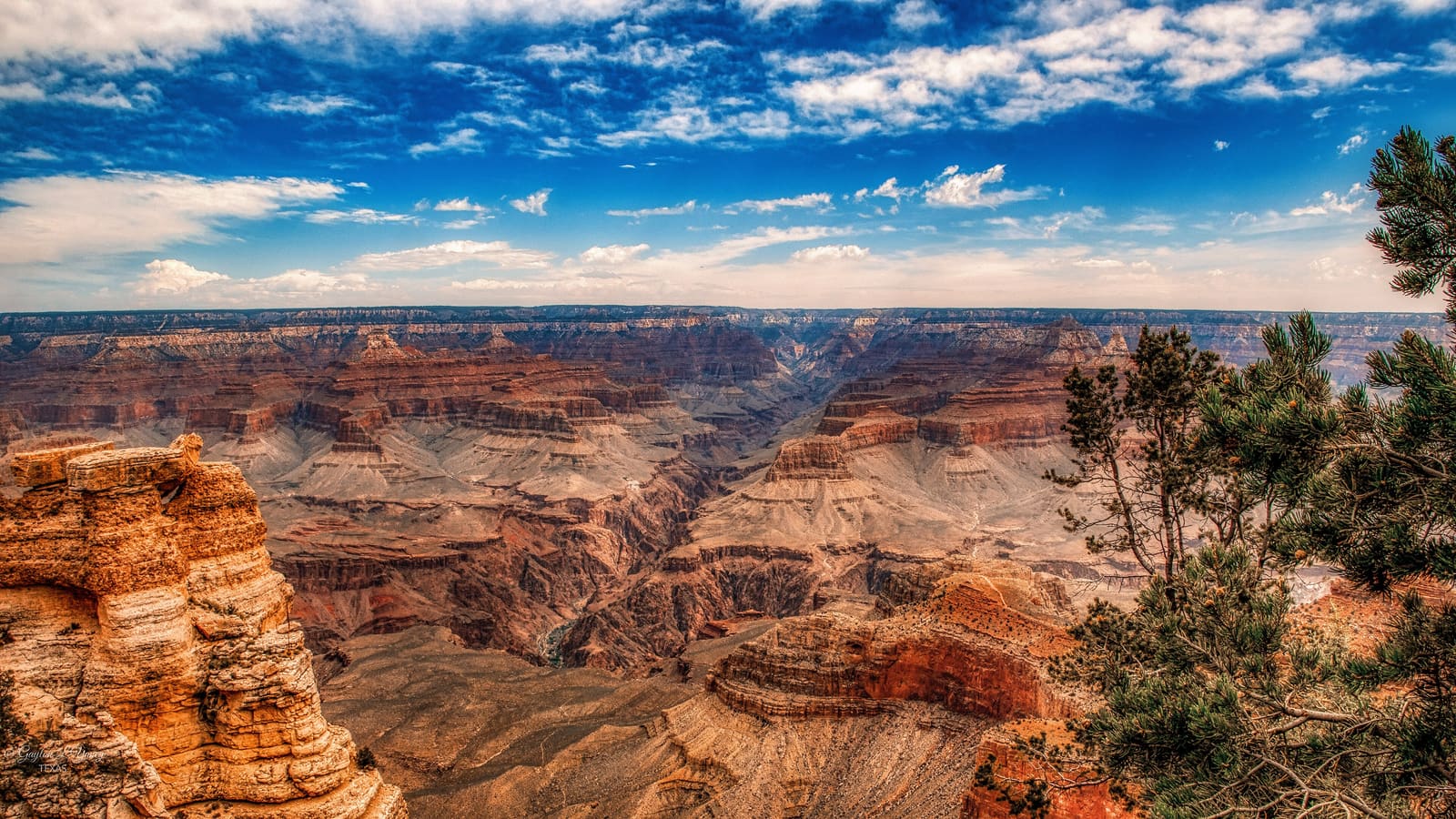
The canyon itself. There is no equivalent anywhere else on Earth, and no description, photograph, or advance research fully prepares a first-time visitor for the actual sight of standing at the rim. The scale — 277 river miles long, up to 18 miles wide, and roughly a mile deep — is not legible from photographs the way it is in person.
The visual experience at the rim is singular and cannot be replicated by any other Arizona destination. Sedona's red rock formations are exceptional, and Monument Valley is one of the most recognizable landscapes on Earth, but neither produces the same comprehension of geological time that the canyon communicates at the rim.
Beyond the view:
- Inner canyon hiking: The Bright Angel Trail and North Kaibab Trail descend into a landscape that is entirely different from the rim. Day hiking to Plateau Point (roughly 12 miles round-trip, strenuous) or the Colorado River (not recommended as a day hike — plan a multi-day permit trip if this is your goal) exposes you to a world that cannot be seen from above.
- Colorado River rafting: Commercial and private multi-day rafting trips through the canyon are a distinct category of experience. These require significant advance planning (some multi-year permit lotteries for private trips) and are outside the scope of a day visit.
- The sunrise and sunset light: The South Rim's orientation means that sunrise and sunset both produce dramatic light on the canyon walls that changes minute to minute. If you only have one canyon visit in your life, staying for the sunset is not optional.
Combining Both: The One-Day Add-On
The most common trip structure for first-time visitors to northern Arizona is to base in Flagstaff and day-trip the canyon — and for good reason. The drive from downtown Flagstaff to the South Rim Visitor Center via US-180 north to AZ-64 east takes approximately 1.5 to 1.75 hours in normal conditions. That's a realistic commute for a full-day excursion.
A day trip structure that works:
- Depart Flagstaff by 7:00 AM to reach the South Rim before 9:00 AM
- Walk the Rim Trail west from Mather Point (flat, paved, accessible to everyone)
- Descend partially on the Bright Angel Trail — even a one-mile descent and return gives you a canyon perspective that the rim cannot provide
- Eat at the canyon (manage expectations on food quality and cost)
- Drive the Desert View road east (adds 25 miles one-way) for less-crowded viewpoints and the Desert View Watchtower
- Return to Flagstaff in time for dinner
What does not work as a day trip: hiking to the Colorado River and back. The NPS explicitly advises against attempting to reach the river and return in a single day. The descent is deceptively easy; the ascent in heat is genuinely dangerous. If inner-canyon hiking is your goal, plan a permitted overnight stay.
There is no scheduled shuttle service connecting Flagstaff to the South Rim. A car or a guided tour is required. Tour operators in Flagstaff offer Grand Canyon day excursions; verify current availability and pricing directly with local operators.
If You Only Have Time for One: The Decision Framework
This is the question the page title asks, and here is the honest answer: if you have never seen the Grand Canyon, see the Grand Canyon. It is one of the seven natural wonders of the world, and no travel rationale justifies skipping it in favor of a good restaurant scene.
The case for Flagstaff over the canyon as a sole destination applies when:
- You have already visited the canyon and are returning to the region
- Your group has mobility or accessibility limitations that make the canyon rim (where the most compelling viewpoints require walking) less accessible than a walkable downtown
- You are traveling primarily for hiking, astronomy, or cultural interests that Flagstaff serves better
- You are doing a longer Southwest road trip where the canyon will appear on another leg
The case for doing both is strong whenever your trip is four or more days. The two days in Flagstaff plus one Grand Canyon day trip structure is one of the most efficient three-day itineraries in the American Southwest for maximizing distinct, high-quality experiences per travel day.
Lodging Strategy
The lodging question — stay in Flagstaff and day-trip versus stay on the South Rim — has a clear practical answer for most visitors: Flagstaff.
South Rim lodging is managed by Xanterra Parks and Resorts and the NPS concessionaire system. The inventory is limited (roughly 900 rooms across all lodging options combined), demand far exceeds supply during peak season, and reservations open a year or more in advance for El Tovar and the main lodge properties. If you have not booked 6 to 12 months out, South Rim lodging may simply not be available on your dates.
Flagstaff has hundreds of hotel rooms across all price tiers, from basic chain properties on Butler Avenue to downtown boutique hotels and historic Route 66 motels. Last-minute availability, while not guaranteed in peak summer, is far more realistic than the South Rim. The price per night is generally lower for comparable quality.
The argument for staying on the South Rim is real but narrow: if you want to walk to a canyon viewpoint at dawn or after dark without driving 80 miles each way, a rim-side lodge room is worth the booking effort. Sunrise at the canyon without 100 other people who drove up from Flagstaff is a different experience. For that, book a year out and plan your trip around it. For everyone else, Flagstaff is the correct base.
Practical Distance and Timing Notes
The most direct route from downtown Flagstaff to the South Rim Visitor Center is US-180 north from Flagstaff to Valle, then AZ-64 north to the South Rim entrance — approximately 80 miles and 1.5 to 1.75 hours in normal conditions. An alternative route via US-89 north to Cameron and then AZ-64 west adds roughly 20 miles but takes a similar time and provides a different landscape en route (the Painted Desert and the Cameron Trading Post).
There is no public shuttle or bus service connecting Flagstaff to the South Rim as of this writing. The Flagstaff Pulliam Airport (FLG) has limited airline service; most visitors arrive by car via I-17 from Phoenix or I-40 from Albuquerque/Los Angeles. Rental cars are available at Flagstaff Pulliam and at the Flagstaff Amtrak station — verify current rental availability before counting on it, as inventory at smaller airports can be limited during peak season.
The South Rim's entrance fee covers a 7-day vehicle pass. An America the Beautiful annual pass covers this fee and pays for itself at two to three national park or monument visits. If this is one stop on a longer Southwest trip that includes other federal lands, the annual pass is almost always the better value.
Frequently Asked Questions
Is Flagstaff worth a stop if I am going to the Grand Canyon?
Almost always, yes. Flagstaff is 80 miles from the South Rim on the logical route from Phoenix or Las Vegas. At minimum, a one-night stay gives you access to a real restaurant scene, comfortable and affordable lodging, and Route 66 character. Most visitors who skip Flagstaff entirely wish they had not.
How long does a Grand Canyon day trip from Flagstaff take?
The drive is roughly 80 miles and 1.5 to 1.75 hours each way. A full day trip that includes meaningful time at multiple viewpoints, a partial Bright Angel Trail descent, and the Desert View drive comfortably fills 10 hours. Plan to depart Flagstaff by 7:00 AM and return by early evening.
Which has better restaurants — Flagstaff or the Grand Canyon?
Flagstaff, decisively. The South Rim has a handful of hotel restaurants and a cafeteria, all priced for a captive market. Flagstaff has a genuine restaurant scene with craft breweries, solid Mexican food, and several well-regarded dinner options at normal market prices.
Which is better for families with kids?
Both work, but for different reasons. The Grand Canyon is a singular visual experience that most children remember permanently. Flagstaff offers more variety — kid-friendly hikes, Lowell Observatory evening programs, a walkable downtown. The most practical family structure is usually Flagstaff as a base with one canyon day trip, which gives kids both experiences without requiring them to sit at the rim all day.
Can you see both Flagstaff and the Grand Canyon in 3 days?
Yes, comfortably. A workable structure: Day 1 — arrive Flagstaff, explore downtown. Day 2 — early Grand Canyon day trip (depart by 7:00 AM, return for dinner). Day 3 — Flagstaff hiking or Lowell Observatory, then depart. Three days is enough to get a real sense of both destinations without feeling rushed.